Transactional Intent Keywords: The Complete Guide to Finding Targeting and Converting Them
By RankTree Team · 2026-07-30
If you had to pick one type of keyword that turns traffic into revenue it would be this one. Transactional intent keywords are the closest thing search marketing has to a "ready to pay" button. Someone typing "buy noise cancelling headphones online" isn't researching they're seconds away from checkout.
This guide breaks down exactly what these keywords are, how to find them, how to build content and pages around them and how to measure whether it's actually working.
What Is Transactional Intent?
Transactional intent (also called buyer intent or purchase intent) describes a search query where the user has already decided what they want and is now looking for where to get it.
They're not comparing options anymore, they're looking for the fastest safest path to completing an action: buying, subscribing , booking or downloading.
Compare these two searches:
"best wireless earbuds 2026" → still comparing (commercial investigation intent)
"buy Sony WF 1000XM6 earbuds" → ready to purchase (transactional intent)
The second searcher has already made the decision. Your job isn't to persuade them anymore, it's to remove friction between "I want it" and "I got it."
How Transactional Intent Works in Modern Search?
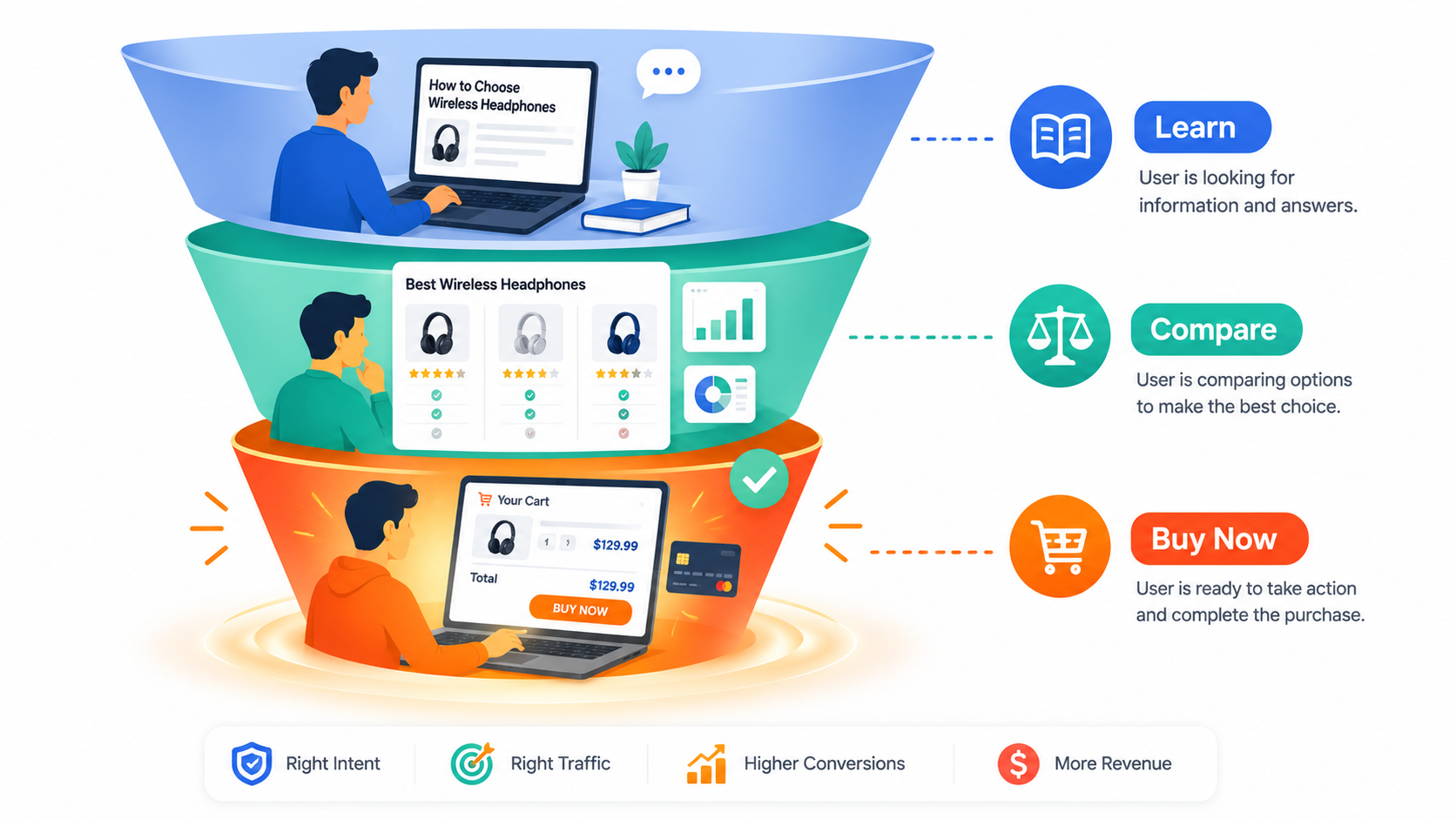
Search engines have evolved far beyond keyword matching. Today Google analyzes behavior signals page type and intent alignment before ranking content.
For transactional intent queries search results are very different from informational searches. Instead of blog posts you will see product pages pricing pages landing pages and shopping results.
This is because Google understands that users want to take action, not read long guides. If your content format does not match this expectation it will not rank even if your keyword is correct.
In AI search systems like ChatGPT and Google AI Overviews this becomes even more important. These systems retrieve content that directly satisfies the action.
Pages with clear offers structured information and strong intent alignment are more likely to be selected.
The Four Search Intent Stages (and Where Transactional Fits)
If you want a deeper breakdown of all four intent stages, check out our detailed guide on the different types of keywords in SEO to see how each one fits into your overall strategy.
Intent Stage | User Mindset | Example Query | Content That Wins |
Informational | Learning curious | "how do wireless earbuds work" | Blog posts guides |
Looking for a specific site | "Sony official store" | Homepage brand pages | |
Commercial Investigation | Comparing options | "Sony vs Bose earbuds" | Comparison pages reviews listicles |
Transactional | Ready to act | "buy Sony WF 1000XM6 online" | Product pages category pages pricing pages |
Understanding this ladder matters because targeting the wrong content type for the wrong stage is the single biggest reason transactional pages underperform.
A blog post will rarely outrank a product page for a "buy X" query and a product page will rarely satisfy someone still comparing.
How to Spot Transactional Intent: Two Types of Signals?
1. Query Level (Search) Signals
These are words and patterns baked directly into the search query itself:
Action verbs: buy order purchase shop book subscribe download sign up get
Commercial modifiers: discount coupon deal sale cheap free shipping near me price cost
Specificity markers: exact model numbers sizes colors ("iPhone 16 Pro 256GB titanium")
Brand + product combinations: "Nike Air Max 270 sale" "Adidas running shoes size 9"
Urgency language: same day delivery in stock ships today
A useful gut check: if you can picture the SERP filling up with shopping ads and product listings rather than blog articles you're almost certainly looking at transactional intent.
2. On Site Behavioral Signals
Once a visitor lands on your site their actions keep signaling intent even if their original search wasn't explicitly transactional:
Adding items to cart (even if they later abandon it)
Repeated visits to the same product page
Using filters (size color price range)
Checking shipping timelines return policy or FAQ pages
Comparing 2–3 specific SKUs back to back
These behavioral cues let you re-target or personalize even when the entry keyword looks informational.
How to Find Transactional Keywords (Step by Step)?
Step 1: Map your product/service vocabulary first.
List every way a customer might refer to what you sell including the words they use, not just your internal product names.
Step 2: Run keyword research and filter by intent
Tools like Ahrefs SEMrush Google Keyword Planner or Moz Keyword Explorer let you filter suggestions by intent classification. Look at monthly volume alongside keyword difficulty a keyword with decent volume and moderate difficulty beats one with huge volume you can't realistically rank for yet.
Step 3: Layer in transactional modifiers
Take your core product terms and combine them with modifiers such as:
buy, order, purchase, shop, price, cost, cheap, deal, discount, coupon, promo code, sale, clearance, free shipping, same-day delivery, near me, in stock, best price, for sale, subscription, sign up, download, book now, request a quote, rent, lease, trial.
Long tail combinations ("buy stainless steel garden shovel online") convert at a much higher rate than short head terms even though volume is lower.
Step 4: Reverse engineer competitor rankings
Use a competitive gap tool to see which transactional keywords competitors rank for that you don't, especially ones where they're ranking positions 2–20 (within striking distance). This tells you where your content or page structure is falling short not just where the opportunity exists.
Step 5: Check the actual SERP before committing
Search the keyword yourself. If the results page is dominated by shopping ads product pages and category pages transactional intent is confirmed. If you see "best of" lists and comparison articles instead the keyword is more commercial than transactional and target it with a different content type.
Building Pages That Convert Transactional Traffic
On Page SEO Checklist
Title tag & meta description: include the transactional modifier naturally (e.g. "Buy [Product] Online Free Shipping & 30 Day Returns")
H1/H2s: mirror how customers search not internal product naming
Product imagery: multiple angles lifestyle shots and video where possible
Specifications table: size material compatibility answer the practical questions before they're asked
Reviews and ratings: visible near the top of the page not buried
Clear CTA: "Add to Cart" "Get Your Quote" "Book Now" action oriented not vague
Trust elements: return policy security badges shipping timelines stated upfront
Technical SEO Most Guides Skip
This is where a lot of transactional page advice stops short and where you can actually pull ahead:
Structured data: implement Product Offer and AggregateRating schema so price availability and star ratings can show directly in search results.
FAQ schema on product/category pages to capture "People Also Ask" real estate.
Core Web Vitals: transactional pages are conversion sensitive slow load times or layout shift on a checkout flow directly cost sales not just rankings.
Mobile first design: a large share of transactional searches happen on mobile; test your add to cart and checkout flow on a phone not just desktop.
Canonical and pagination handling on category pages to avoid duplicate content issues from filters and sort parameters.
Transactional vs. Commercial Keywords: Don't Confuse Them
Transactional | Commercial Investigation | |
Mindset | "I'm buying now" | "I'm still deciding" |
Example | "order gluten free meal delivery" | "best gluten free meal delivery services" |
SERP shows | Shopping ads product/category pages | Reviews comparisons listicles |
Best content type | Product page pricing page landing page | Comparison guide review roundup |
Conversion goal | Purchase/signup | Move to consideration → eventual purchase |
Treating a commercial keyword like a transactional one (or vice versa) is one of the most common reasons a page ranks but doesn't convert or converts but can't rank.
Using Transactional Keywords Beyond SEO
Paid search: these keywords typically have higher CPC but also higher ROAS prioritize budget here over top of funnel terms.
Retargeting: pair transactional keyword landing pages with cart abandonment email/ad sequences.
Competitive intelligence: tracking who ranks and who runs ads on your transactional terms tells you who your real competitors are, which isn't always who you'd assume.
Content gap analysis: keywords where competitors rank 2–20 and you don't rank at all are your highest leverage next moves.
A Word of Caution: Avoid Chasing the Wrong Traffic
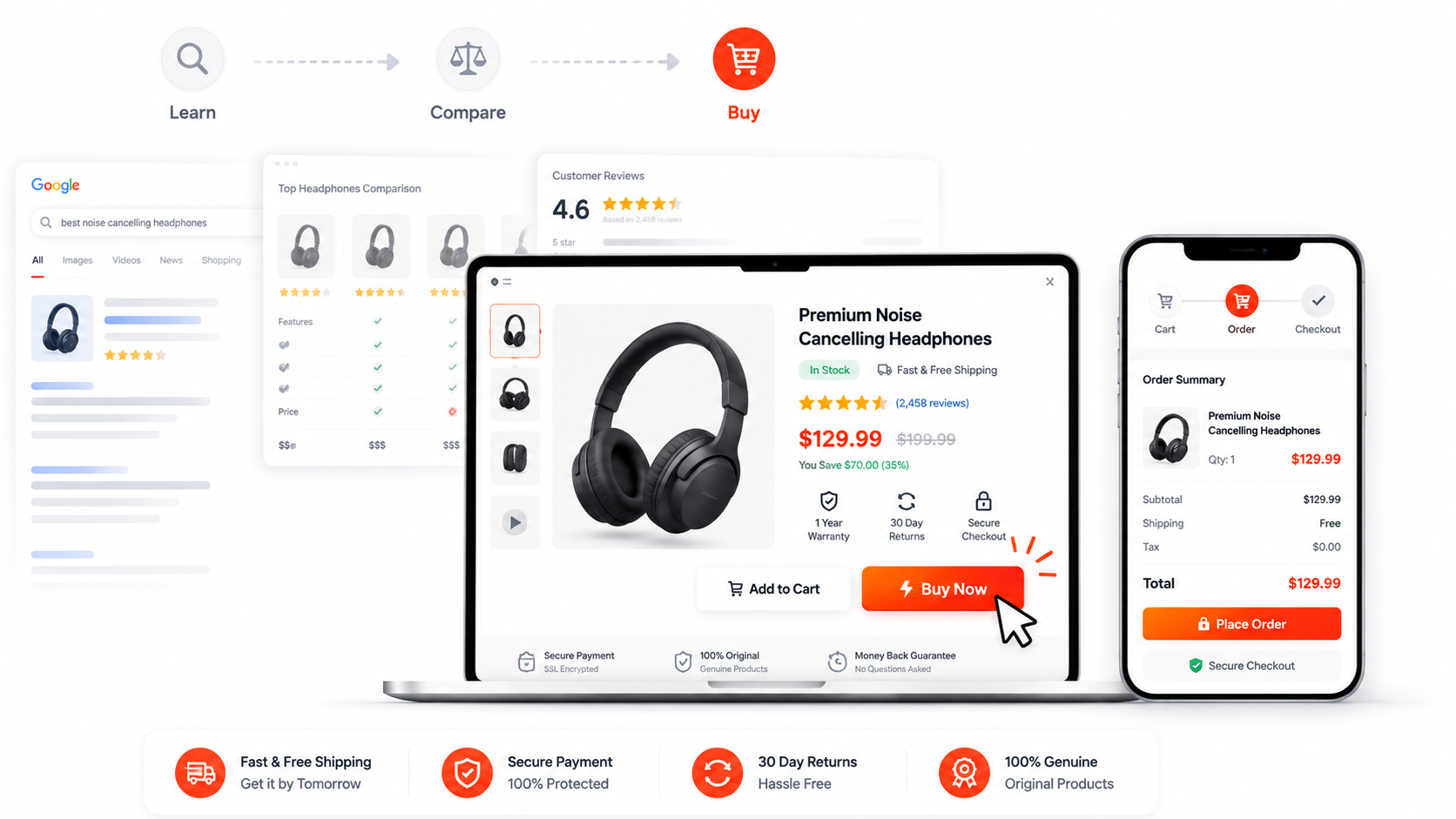
Not every "buy" adjacent query is worth targeting. "Buy [competitor brand] alternative" or "[product] free download" (when you don't offer a free version) can pull in visitors who will never convert, hurting your engagement metrics without adding revenue. Filter your keyword list by realistic purchase eligibility not just by the presence of a transactional sounding word.
Measuring Whether It's Working
Conversion rate by landing page (not just site wide)
Assisted conversions a transactional keyword visit that converts on a later session still counts
Cart to purchase ratio for pages driven by these keywords
Position tracking specifically for your modifier + product combinations since these move independently of your broader domain rankings
Key Takeaway
Transactional intent keywords sit at the exact point where SEO strategy meets revenue.
Getting them right isn't just about finding the right words, it's about matching the right content type, removing on-page friction, backing it with technical SEO like structured data and measuring by conversion, not just ranking.
Get that combination right and these keywords become the highest ROI part of your entire content strategy.
FAQs
What's the difference between transactional and commercial keywords?
Transactional keywords signal a user is ready to act right now (buy order sign up). Commercial keywords signal a user is still comparing options before deciding (best top review vs).
Do transactional keywords always have "buy" in them?
No. Brand + product combinations pricing queries and "near me" searches can all carry transactional intent without an explicit action verb.
Are transactional keywords harder to rank for than informational ones?
Often yes because e-commerce sites and marketplaces compete hard for them but they convert at a much higher rate so even moderate rankings can outperform high ranking informational content on revenue.
Should I target transactional keywords with blog posts?
Generally no. Product pages category pages or dedicated landing pages match user intent far better and tend to outrank blog content for these queries.