Navigational Search Intent: Guide to Understanding Identifying and Optimizing for It
By RankTree Team · 2026-07-29
When someone types "Facebook login" or "Nike official website" into Google they aren't exploring or comparing options, they already know exactly where they want to go.
This is navigational search intent, one of the four core types of search intent and one of the most overlooked opportunities in SEO.
Most guides on this topic either stay too shallow (a definition and a few examples) or drift off topic into unrelated technical SEO.
This guide covers what those miss: how navigational intent fits with the other search intentions, how to technically optimize for it, how to measure it and how to protect it from competitors.
What Is Navigational Search Intent?
Navigational search intent is the goal behind a search query when a user wants to reach a specific website brand app or page rather than learn something new or make a purchase decision.
The search engine in this case is simply a shortcut, a faster alternative to typing a URL or remembering where they bookmarked something.
Common triggers for navigational queries include:
Brand name searches, "Spotify" "Amazon" "Airbnb"
Login and account access, "Gmail login" "Netflix sign in"
Specific page requests, "Nike return policy" "Uber customer service"
App or tool searches, "Canva app" "ChatGPT"
Unlike informational intent (learning) commercial investigation (comparing) or transactional intent (buying) navigational intent is defined by one thing: the destination is already known.
Navigational Intent vs. Other Search Intents
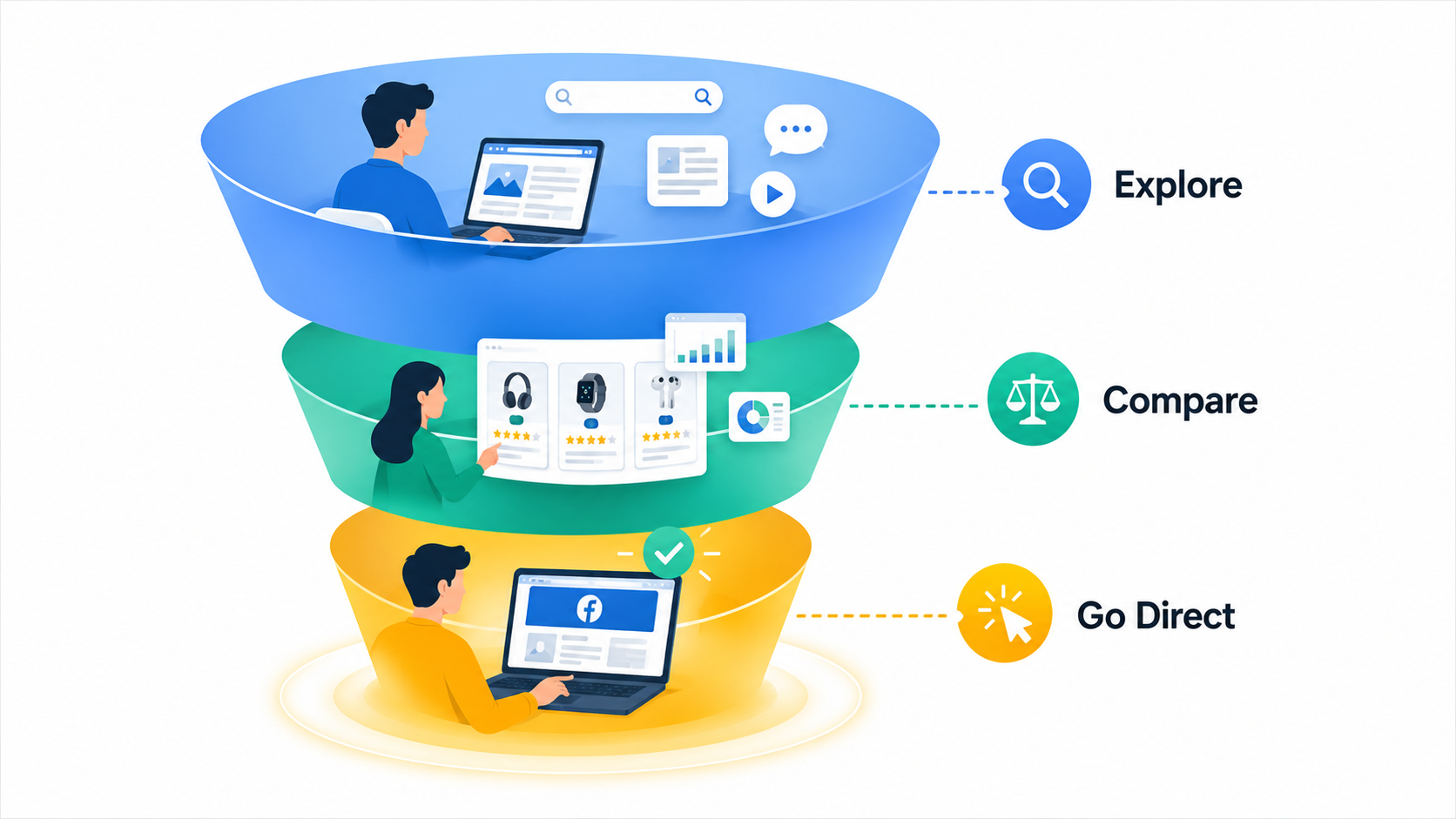
Understanding how navigational intent differs from the other three intent types helps clarify why it needs its own SEO approach.
Search Intent | User Goal | Example Query | Funnel Stage |
Navigational | Reach a known website/page | "PayPal login" | Any stage, often repeat visitors |
Informational | Learn or find an answer | "how does SEO work" | Awareness |
Commercial Investigation | Compare options before deciding | "best CRM software 2026" | Consideration |
Transactional | Complete an action (buy sign up) | "buy iPhone 16 online" | Decision |
A useful way to think about it: informational and commercial queries are about discovery while navigational queries are about retrieval. The user has already discovered you, now they just need a fast path back.
Why Navigational Search Intent Matters for SEO?
Navigational intent is often dismissed as "just branded search" but it has direct business consequences:
It's a trust and brand authority signal. A high volume of branded navigational searches tells Google (and you) that people already recognize and trust your brand, a strong indirect ranking and reputation signal.
It protects revenue from competitor hijacking. If your official page doesn't rank first for your own brand name, competitors can bid on your branded keywords in Google Ads or outrank you organically, intercepting customers who were already looking for you.
It reduces friction and improves conversion. Users with navigational intent are typically further along the journey, support seekers returning customers or people ready to log in and buy again. A smooth path to the right page reduces bounce rate and boosts conversions.
It fuels SERP real estate. Sitelinks Knowledge Panels and brand SERP features are earned largely through strong navigational signals giving you more visual space and more clicks on the results page.
How to Identify Navigational Search Queries?
Navigational queries usually share recognizable patterns:
Brand or product name is present: "Slack" "Adobe Photoshop"
Action/account based modifiers: "login" "sign in" "sign up" "dashboard"
Support/service modifiers: "customer service" "contact" "returns" "cancellation policy"
Explicit destination modifiers: "official website" "official store" "homepage"
High branded CTR with low SERP exploration, in Google Search Console these queries show high click through rate concentrated on one URL with little competitor click share
If you're auditing your own site Google Search Console's Performance report is the fastest way to isolate navigational queries: filter by queries containing your brand name then check whether your intended page, not a subpage category or old URL, is the one earning clicks.
Types of Navigational Queries (With Examples)
Direct brand queries "Spotify" "Airbnb" "Trello"
Brand + destination queries "Notion login" "Amazon returns" "Uber help center"
Brand + product/service queries "Apple MacBook Air" "Nike Air Max" "Google Workspace pricing"
App/tool specific queries "Canva app download" "ChatGPT app"
Voice and conversational navigational queries With the rise of voice assistants, navigational queries increasingly appear as full sentences: "open my Gmail" "take me to Netflix" or "find the Starbucks app."
Optimizing for this means ensuring your brand's structured data and app deep links are indexable and correctly associated with your domain, an angle most navigational intent guides skip entirely.
How to Optimize for Navigational Search Intent?
1. Make Sure You Rank #1 for Your Own Brand
This sounds obvious but many businesses lose this position to directory sites review platforms or social profiles that outrank the official homepage. Audit your branded SERP quarterly.
2. Implement Organization Schema Markup
Adding Organization schema (with same as links to your official social profiles) helps Google connect your brand entity across the web strengthening your eligibility for a Knowledge Panel, one of the strongest navigational intent SERP features.
3. Optimize for Sitelinks
Google auto generates sitelinks beneath your top result when your site architecture is clear and internally linked well. Use descriptive consistent anchor text for key pages (Login Support Pricing About) so Google can confidently surface them as sitelinks.
4. Protect Branded Keywords in Paid Search
Even if you rank #1 organically competitors can still bid on your brand terms. Run defensive branded PPC campaigns especially for high value navigational queries like "[Brand] login" or "[Brand] pricing."
5. Keep NAP and Business Info Consistent
For local and multi location businesses Name Address and Phone number (NAP) consistency across Google Business Profile directories and your website reinforces the entity signals search engines use to serve you for navigational queries like "[Brand] near me."
6. Strengthen Internal Navigation and URL Clarity
A confusing site structure undermines navigational intent even after a user lands on your domain. Clear menus, breadcrumb navigation and predictable URL patterns (e.g. /login /support /pricing) reduce bounce and second search behavior.
7. Monitor and Leverage Reviews and Social Proof
Star ratings appearing directly in the SERP (via Review schema or Google Seller Ratings) reinforce a navigational searcher's decision to click even when they already intended to visit your site.
Measuring Navigational Search Performance
Unlike informational content, navigational intent success isn't measured through rankings alone. Track these signals:
Direct traffic (Google Analytics 4): visits from users typing your URL directly or via bookmarks, a proxy for strong brand recall
Branded query performance (Google Search Console): filter queries containing your brand name; monitor impressions CTR and average position
Sitelinks presence: check manually or via rank tracking tools that support SERP feature detection
Bounce rate on branded landing pages: a high bounce rate on your homepage for branded queries suggests a mismatch between what users expect and what they find
Conversion rate for branded sessions: branded navigational traffic typically converts higher than generic traffic, track this separately in GA4 to prove the commercial value of brand protection efforts.
Common Mistakes to Avoid
Not ranking first for your own brand name, allowing directories or news mentions to outrank your homepage
Ignoring competitor bidding on your branded keywords in paid search
Inconsistent NAP data across business listings causing entity confusion
Overly complex URL structures that make direct navigation (e.g. to a login or support page) difficult
No schema markup missing an easy win for Knowledge Panel and sitelink eligibility
Treating all branded traffic as "already won" and neglecting the landing page experience
Key Takeaway
Navigational search intent isn't just "people searching your brand name", it's a measurable trust signal, a revenue protection issue and an SEO opportunity that's easy to under invest in because it feels automatic.
Treat it with the same rigor as informational or transactional content: audit your branded SERP, strengthen your entity signals with schema, protect your branded keywords and measure direct and branded traffic as seriously as you measure new visitor acquisition.
FAQs
What is an example of navigational search intent?
Searching "Spotify login" or "Nike official website", the user already knows the destination and is using the search engine as a shortcut to get there.
How is navigational intent different from transactional intent?
Navigational intent is about reaching a known destination; transactional intent is about completing an action like a purchase or sign up. A query can carry both, "Amazon" is navigational while "buy AirPods on Amazon" leans transactional.
Does navigational search intent affect rankings?
Not directly as a ranking factor but it strongly influences CTR sitelinks eligibility and Knowledge Panel presence, all of which indirectly support stronger overall search visibility.
How do I optimize a page for navigational intent?
Ensure your official page ranks first for brand queries, add Organization schema, maintain consistent NAP data structure, clear internal navigation and defend branded terms in paid search.
Can competitors rank above me for my own brand name?
Yes, this happens when your SEO or paid search presence for branded terms is weak or when third party sites (reviews directories news coverage) build stronger relevance signals than your own homepage.